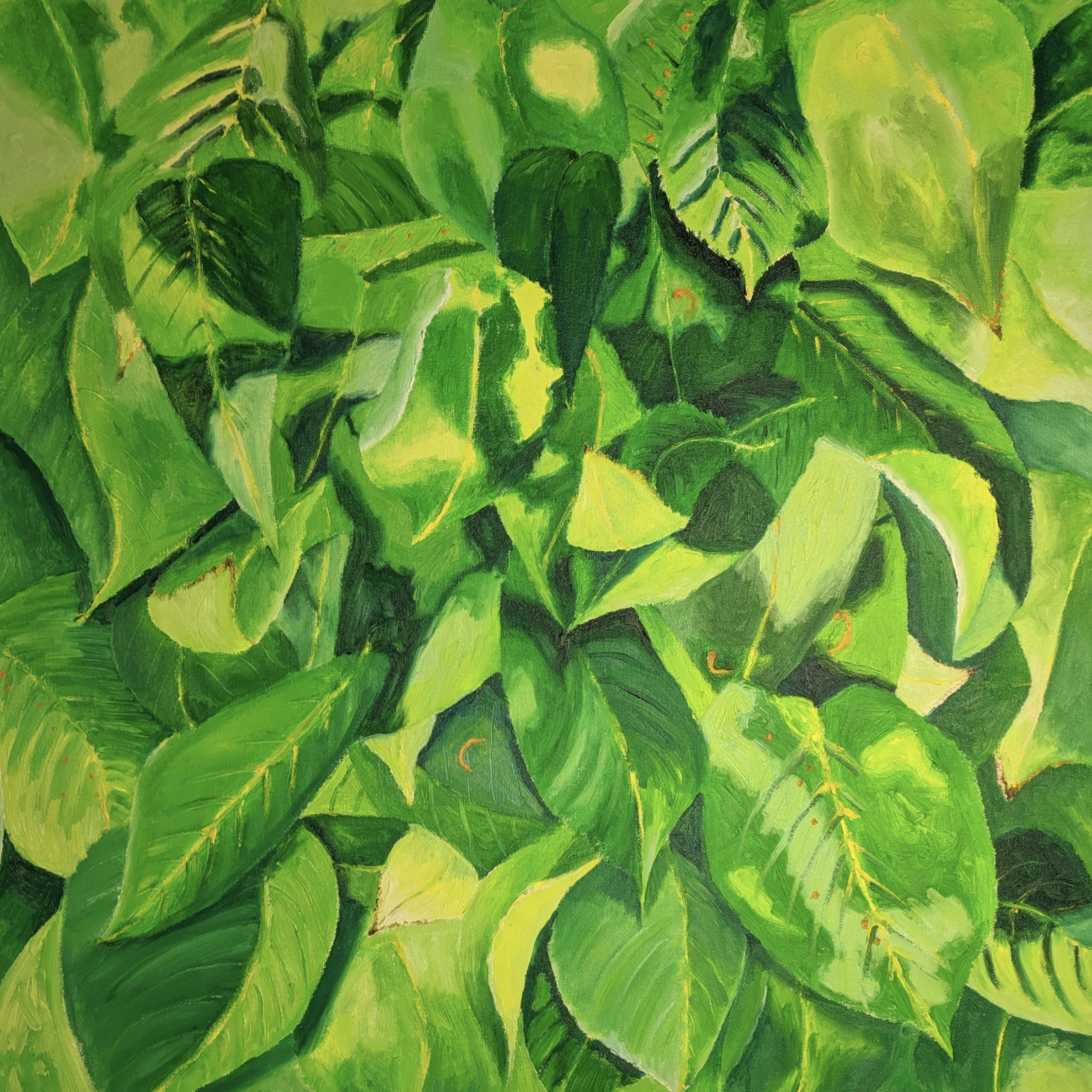
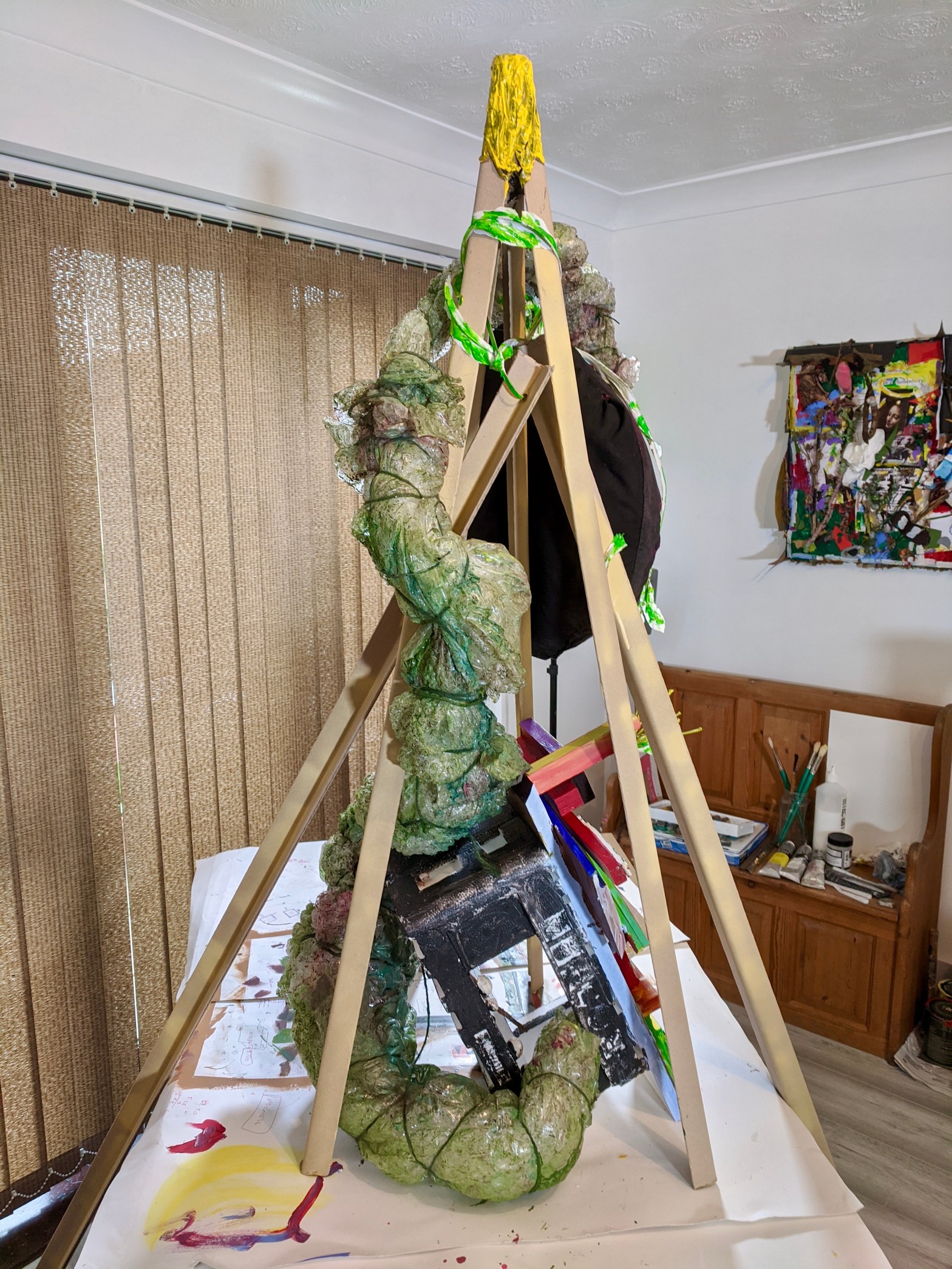
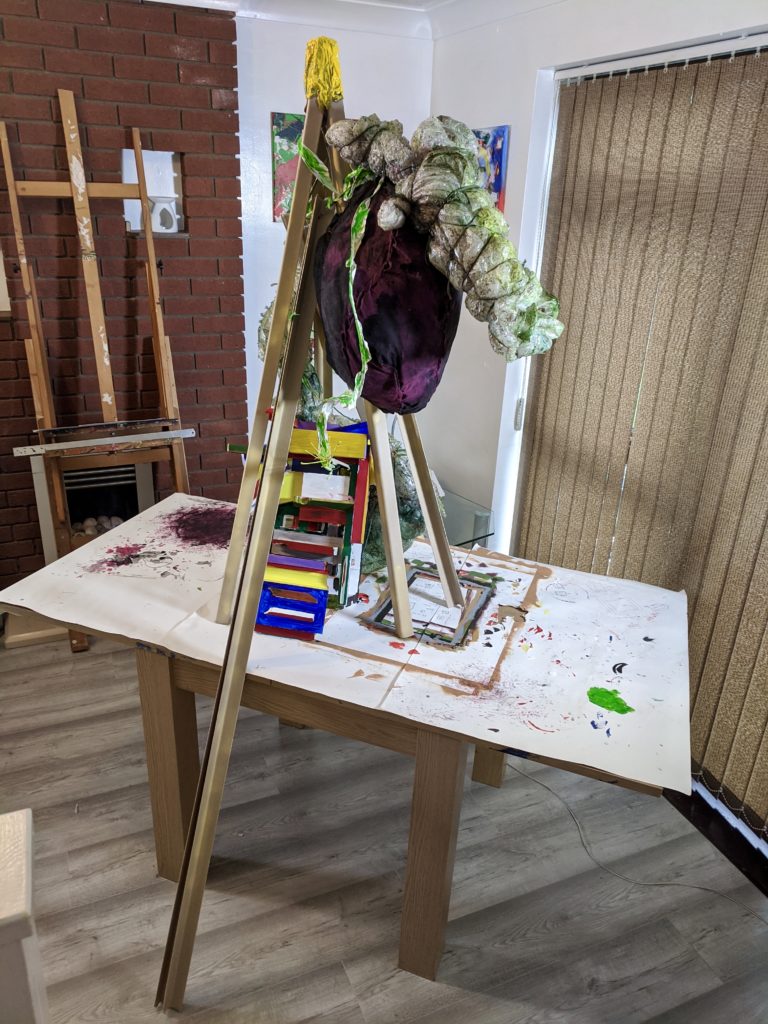
I’ve made a gallery as the sculpture is made to be viewed from every angle so there’s no front or back. You’re also invited to look in at details and then step back to see the whole.
This was a massive Project which only came together when I was reassembling the sculpture after painting the separate elements. Suddenly it began to make sense (the disparate elements started coalescing) and have a meaning…
It became like the combine and I was working with ideas.
The yellow top represents the sun, the giver of life. The bright hard sculpture is man contained in nature… roots underground… the frame man made structures… the runner bean seed symbolises life (all life comes from plants, they are the bottom of the food chain and bio engineered our planet from poisonous gasses to life giving oxygen.
I would include the table and covering as part of the sculpture as this plays with the meaning… is it a table? Is it a sculpture? Or is it a plinth? And projects the sculpture outwards to the viewer so it’s not ‘framed’ but part of the fabric of the room.
Below is my process:
I’m really excited about wout working in 3D as it’s made me realise how I’ve spent four years considering flat pictoral space (where the canvas is an imagined space rather than an ‘object’) and developing a basic visual language for that space, but that there’s a whole new world when I look at objects or ‘entities’ rather than ‘abstracted space’.
To explain that a little further, in a flat rectangular painting you either have a ‘window on the world’ or ‘an imaginary/conceptual window’. Either way, you don’t look at the painting as an object like a tree, or person; you use the painting as a visual or conceptual/imaginative door.
It may be that you can also do this with sculpture but at the moment I’m taken by creating a ‘living’ thing in its own right, something that occupies space and that you look at rather than through. It could be a single thing (like a single tree) that blocks your way. But with sculpture you can walk round and view it from different angles and in different lights – cubism come to life; or like a ‘forest’ that you can walk through and be inside; and you might even be able to animate it so it has a personality and presence like a living creature.
I also assume, though I don’t know, that the same questions regarding art as an object standing in its own right (lit by light) and art as concept (lit by text) apply to sculpture as much as painting.
Choosing and making:
I don’t feel able to sketch models in my sketchbook (in the way I might try out designs or ideas for a painting) as I’m not used to thinking in 3D so don’t have the connection between sketch and realisation.
I really feel the need to have the physical objects and compose by manipulating them in space and playing with their physicality and materiality.
Help given:
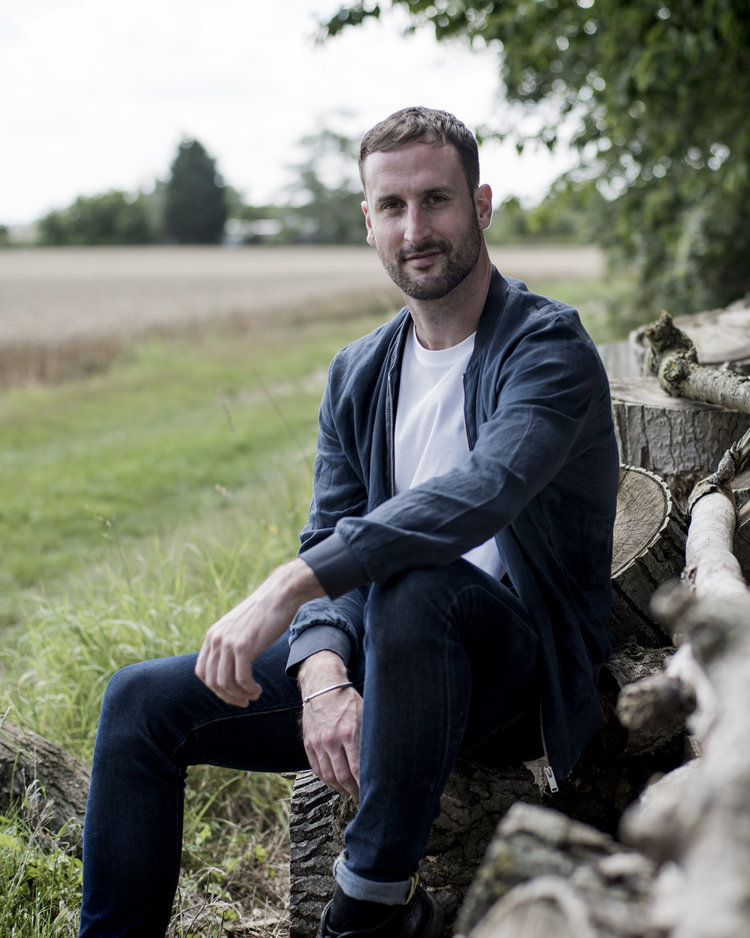
I’ve met a local Chelsea School of Art master craftsman Luke Ebutt James in the village, he did some minor kitchen fitting for me. We chatted all day about sculpture, art, starting a business and what they don’t teach you at art school, and how building a practice is all about building trust.
It was a joy and a revelation to talk to an emerging artist and it’s really helped with this project, he even said I can come to his workshop and pick up some offcuts. So, I’m going to use these for Assignment 2 as I love wood.
Here’s Luke with a link to his website in the caption under his photograph.
Sculpture 1:
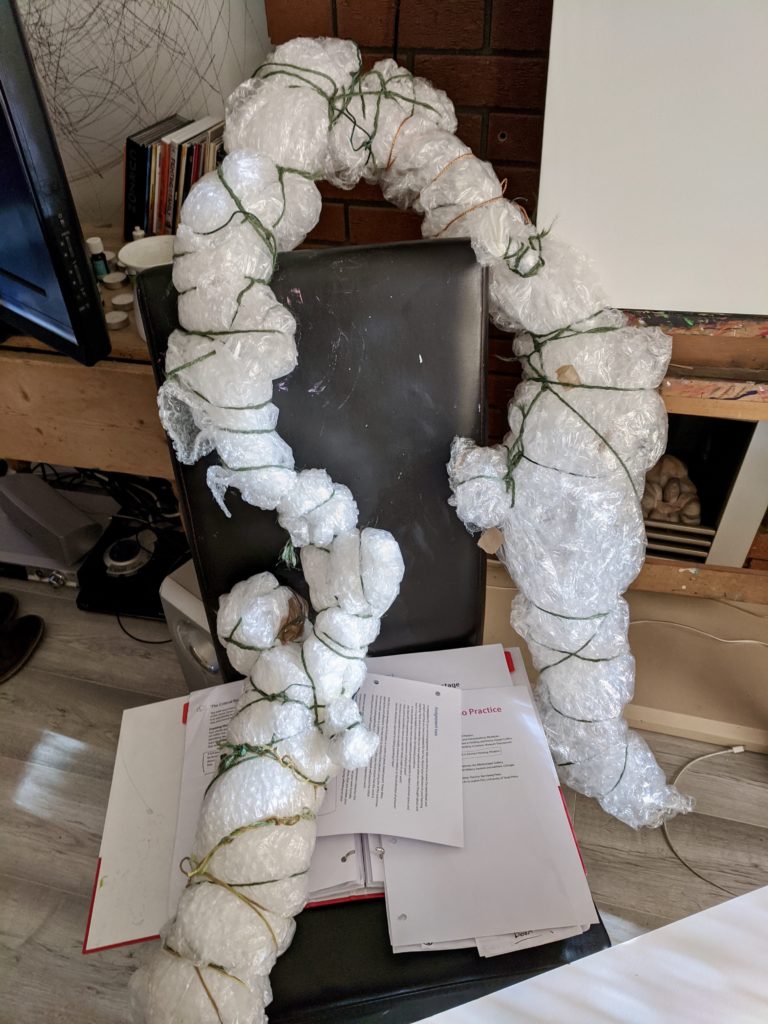
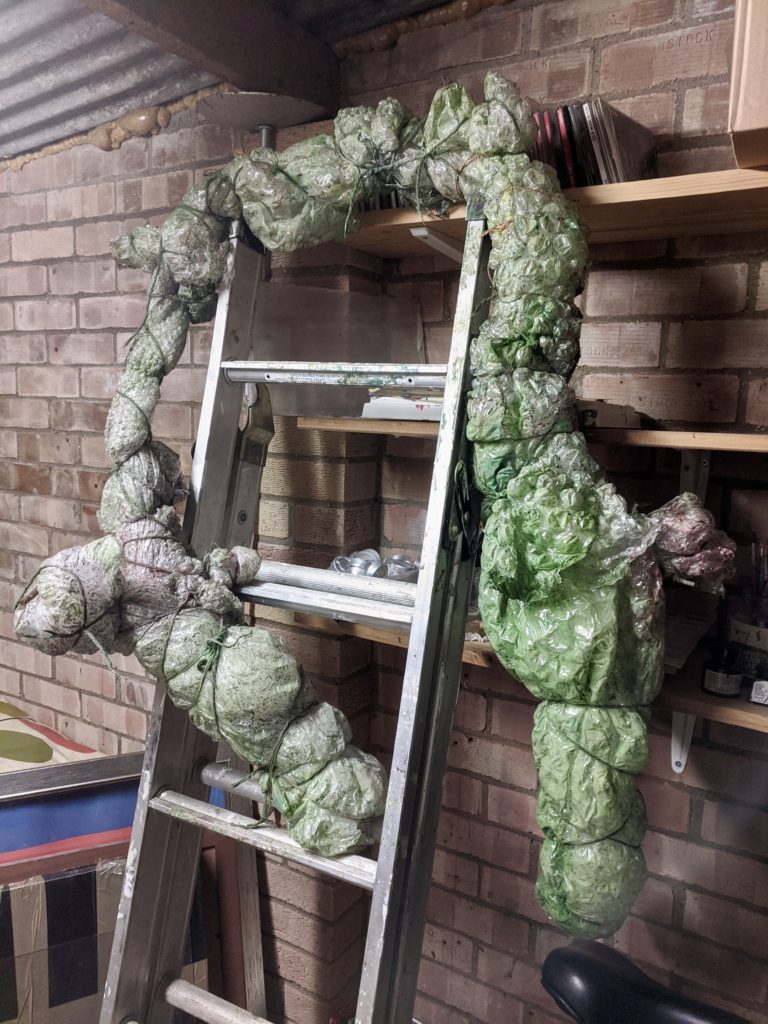
This was made out of bubble wrap held by green garden wire then whipped round with garden twine, old gold Christmas string and natural wool in unsaturated pale dyes.
My idea was to create a twig like organic form with twig like growth nodes, but not to make a ‘model’ of a twig. I thought the different reflective qualities of the bubble wrap and its cellular nature would be interesting to paint.
Even though I whipped, tucked in and overlapping bubble wrap and whipped as quickly as I could this took 30 minutes. I’m glad the instructions said a maximum of 20 minutes otherwise I could have spent days on this!
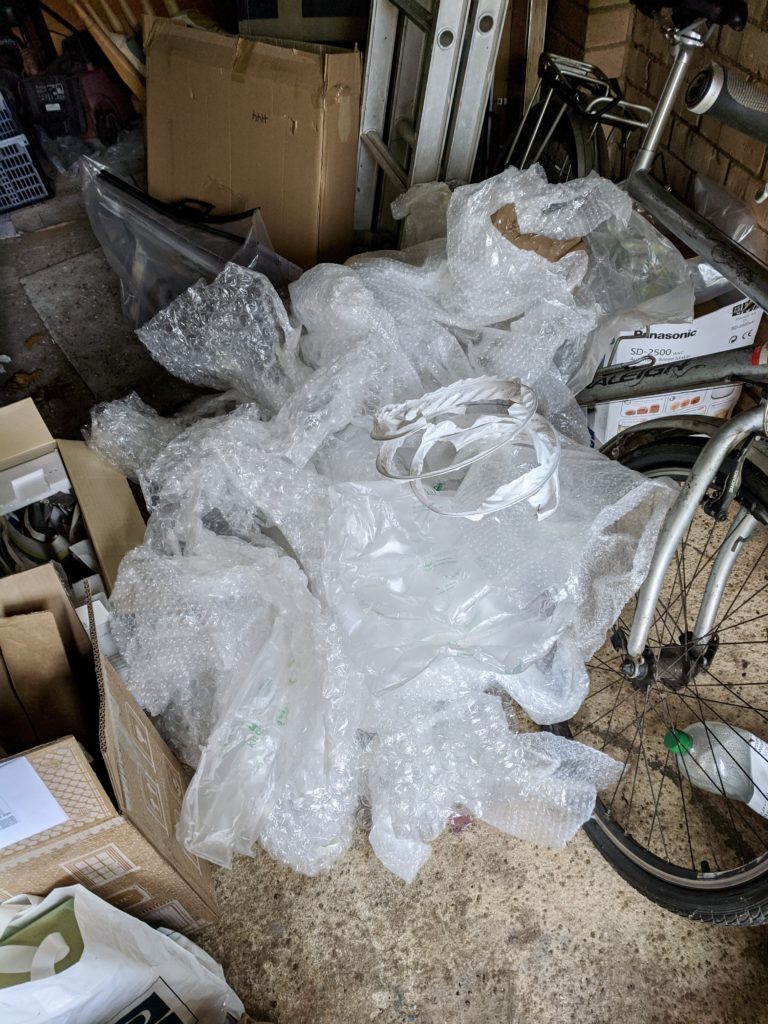
Here are some photographs of the process:
Sculpture 2:
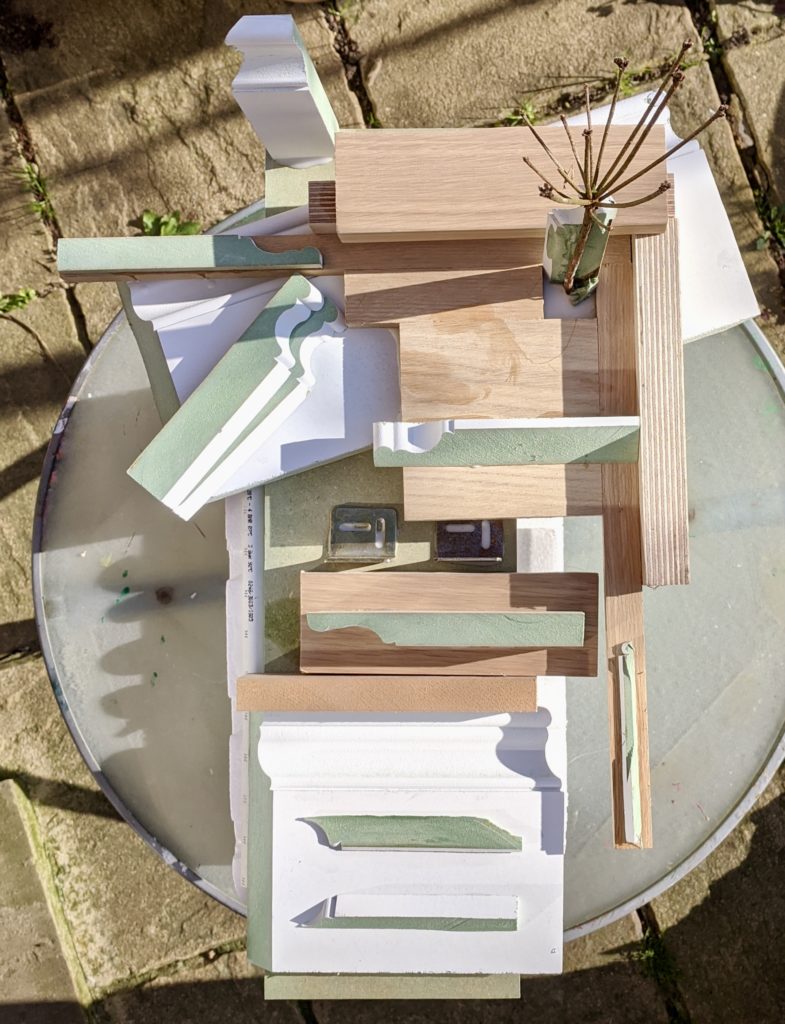
I’d just had Luke in to put back the skirting boards, kick boards and cabinet dividers after my floor had been relaid after my flood.
Because I wanted to use everyday objects and waste to make art and also the waste materials would remind me of the day… like the detritus left after performance art I used everything he left after the job. For instance we stressed the pipe at the back of the washer and nearly re-flooded the kitchen and had to recut the plumbing, so I included the offcut plastic pipe. I also liked the idea of counterpoising the rough organic shape of the bubble wrap with flat surfaces so I decided to make a geometric structure trying to balance the shapes and 3D forces. I also thought that this would also give me flat surfaces to paint.
I decided to glue the pieces together as I don’t have woodworking skills.
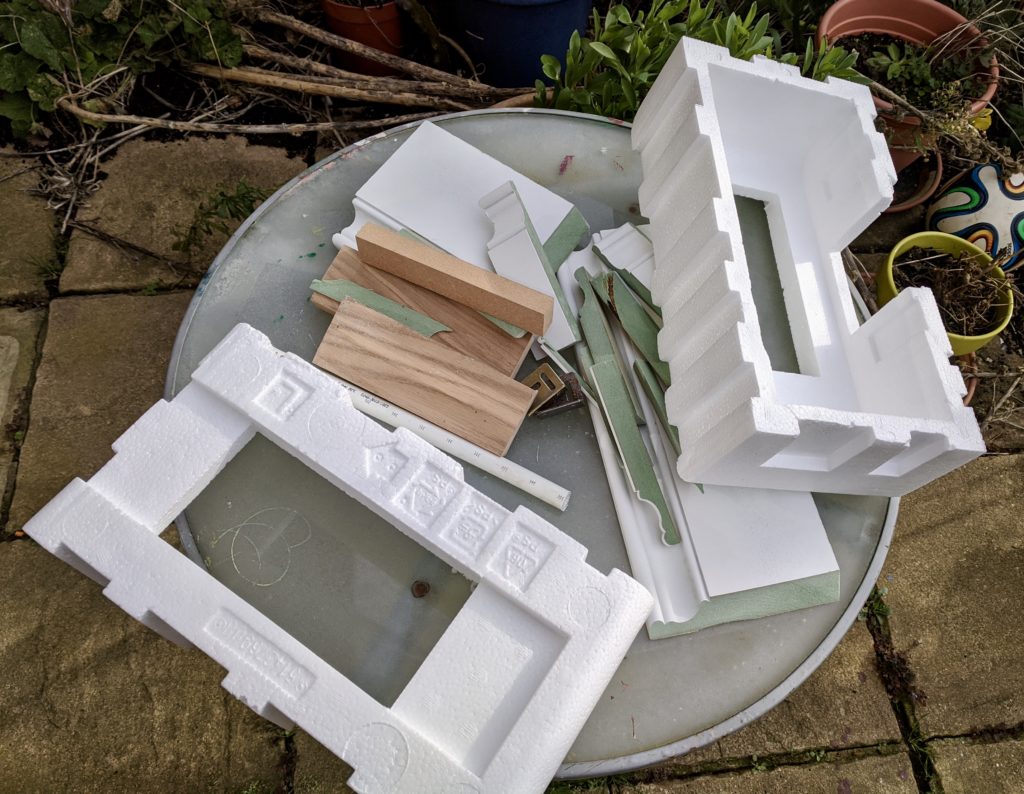
My hard structure was too low and like a Combine so I gave it a plinth from the polystyrene holders that my new printer came in.
Then it had a secret space inside and it made me think of a future city when nature is dead, so I made a mausoleum underneath and put a twig and a leaf in, added snail shells to show a different world below the (what had now become) a city and added a single organic element to the superstructure… a tree.
I guess this took about 40 minutes… it was much more difficult to photograph as one view gave no real idea of its impact so I had to move round it taking multiple images.
Here are some photographs of the making:
Sculpture 3:
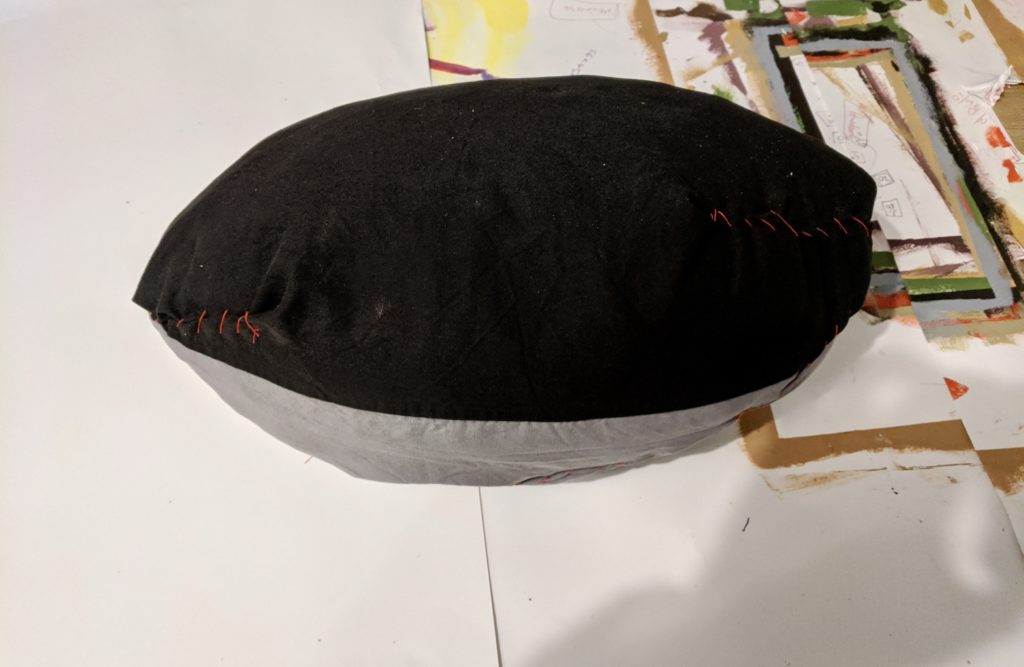
This was relatively quick and within the 20 minutes.
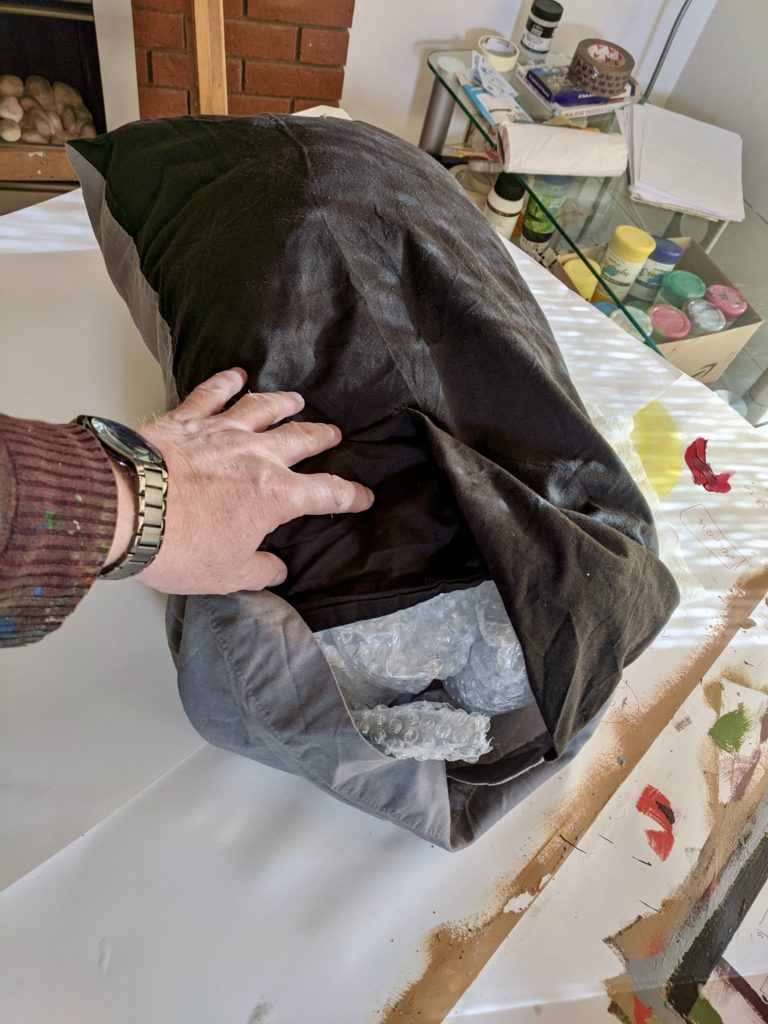
I stuffed an old pillowcase with bubble wrap and sowed the end with red cotton, then pulled it into a ‘bean’ shape.
Here is the process:
Size of objects:
Yes there is plenty of surface area to paint and I can walk round them.
Surface:
The surface is a mix of cotton, polystyrene, mdf, primed mdf, metal, organic materials such as snail shells and bubble wrap. I would imagine most things take acrylic paint though the different surfaces will be really interesting. I’m going to try some spray paint and ink too.
Some surfaces are rigid and some pliable.
There are such a range of surfaces that I’m just going to play and have fun. I’ll record all my results.
Space:
I haven’t got much space but I can pull my table into the middle of the room and walk round it. They can ‘live ‘ while I arrange my sculpture.
However, I haven’t any space inside the house to work on them so will have to paint them outside, let them dry and then assemble the sculpture when they are dry.
Connecting and constructing:
Again, due to my limited construction skills I’m not going to physically connect them but play with different arrangements and stacking.
However, I think the paint may change the materiality, physicality and visual impact of my sculptures to such an extent that I may have to recombine them one I have painted them.
Before Painting:Jessica Stockholder in A world undone – Works from the Chartwell Collection
Great video with lots to unpack… I made a page of notes.
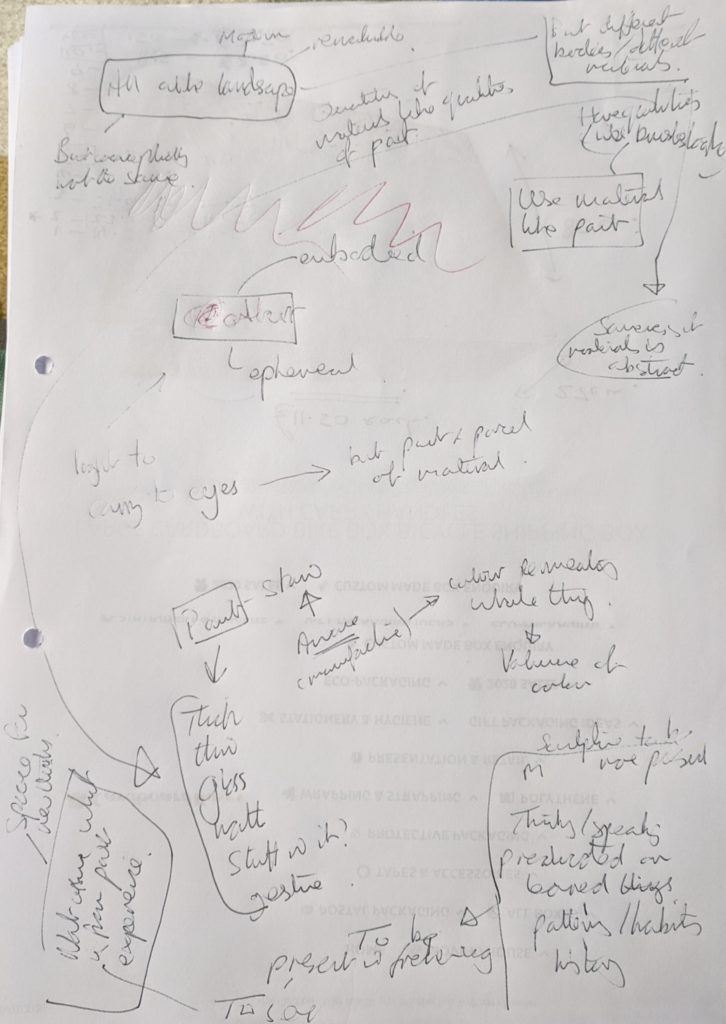
She talks about paint and it’s material qualities such as colour (carried by light); thickness; thinness; gloss or matt; stuff in it or ‘pure’; and gesture… and says that she uses paint both as a coating as a material. And as a material with qualities, then flips it to say that she uses materials (which have more qualities) as paint.
Another point is her distinction of colour as being a surface or permeating the whole thing.
Conceptually she comments on our ‘all alike material landscape’ – we can all buy the same pen or car – and how recent and remarkable that is. And by inference, and joining the dots of her argument, that we see the world with jaded eyes predicated on our history of thinking/speaking/patterns of behaviour and habits. In short we see based on past experience rather than seeing what’s actually there.
And the purpose of her sculpture, by mixing up the function and materiality of ‘stuff’ is to push us into looking and being free to be in the moment and to really see what’s in front of us.
From a painterly perspective this is very like Matisse who, by making us see the world differently challenged not only our seeing, in the immediate sense, but our whole world view and patterns of knowing.
What might be the function of paint in your work… to decorate?Change form? To stick objects together? To disguise objects?
Thinking of Jessica Stockholder’s use of paint and material (if she makes a distinction?) in her sculpture has made me review my use of paint.
I’m not sure how I will use paint till I start painting my sculptures. I don’t have the foreknowledge (of how the materials will take the paint) or any desire to ‘know the outcome’ before I start so will see what evolves as I work on my sculpture.
However, I do have a few things in mind to try out: I don’t think I want to make a decoration/pattern in a Matisse way… though I might; changing the form of the material with the paint might be interesting but I’m not sure how I’ll do this; I don’t think I’m going to add material but could collage newspaper using paint – my worry would be that it becomes a sculptural Combine rather than a sculpture with its own presence and personality; and I don’t want to disguise my materials – skins disguise structure.
What I would like to do is use ink and different thick/thin paints to cover/stain the sculpture.
Ideally I would like to keep the physicality and materiality of my materials showing through, so paint is shown to be paint (another material); maybe give the sculpture some colour identity (so using colour to link the sculpture?) so that my final piece works as a single entity.
Look at Katharina Grosser:Katharina Grosse: Painting with Color | Art21 “Extended Play”
Katherina says she’s challenging the old renaissance concepts that colour as female and low status (the artisans used colour and the academicians used line and concept); and that colour is ephemeral when compared to the materiality of matter. Though one might argue that paint is also matter, and all matter has colour carried by light.
This is a very different inter-subjective ‘reality’ than Jessica Stockholder, and it’s interesting how artists tell themselves different stories which they then purport to be fact.
More interesting is her idea about colour (or more accurately light) breaking down the barrier between subject and object. Thinking about this light is light and fills a space, it may have different wavelengths which we see as different colours but there are no edges, no object subject boundaries where, say, the material of chair stops and the material of air or table begins.
How might you apply paint?
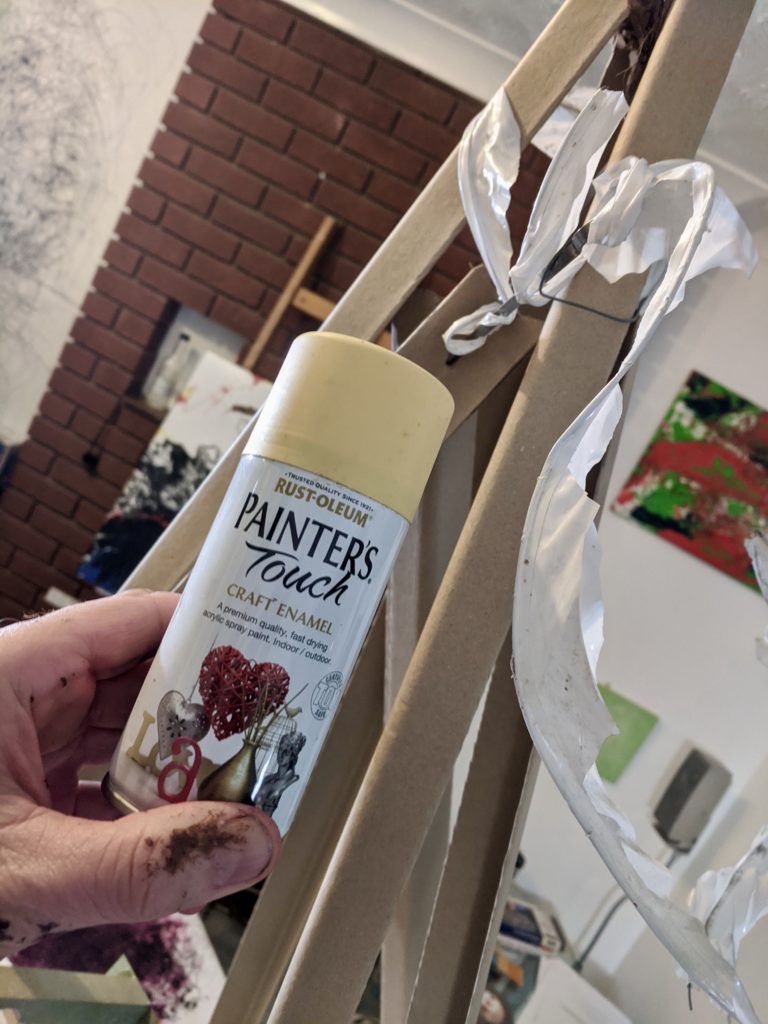
Spray can (I have a can of yellow spray paint); brush; thinned by pouring or through an old sock, fingers or with any object imaginable.
Other than with a brush?
Yes, see above.
How does working in 3D and moving round the objects affect how you apply paint?
A canvas is (basically) a 2D one point perspective exercise where a sculpture is a 3D multi perspective exercise with every part affecting every other part.
Flat hanging canvases may have different viewpoints as you walk past but are generally viewed from front and centre.
A sculpture has to work from every viewpoint so you have to hold the whole work from every angle in your head as everything affects everything else, plus make decisions about what you want the paint to be… decorative, a skin, linking, as a material, conceptual or integral such as natural wood.
Could you use any of the approaches from Part 1?
Yes, which isn’t to say that I will but you could throw the sculpture round, dribble paint from a sock, let the wind take it or feed Pollockian tracery into/onto the surface.
Arrangement 1:
I’ve uploaded four points of view for each arrangement as I want my sculpture to work (as a whole entity) from every point of view. Unlike a painting, a person, and most man made objects I don’t want them to have a ‘front’ that they turn to ‘face’ the world.
For the sake of ease all the photographs are at standing height but the idea is that the viewer would walk in and around, close and from afar, and look from different heights.
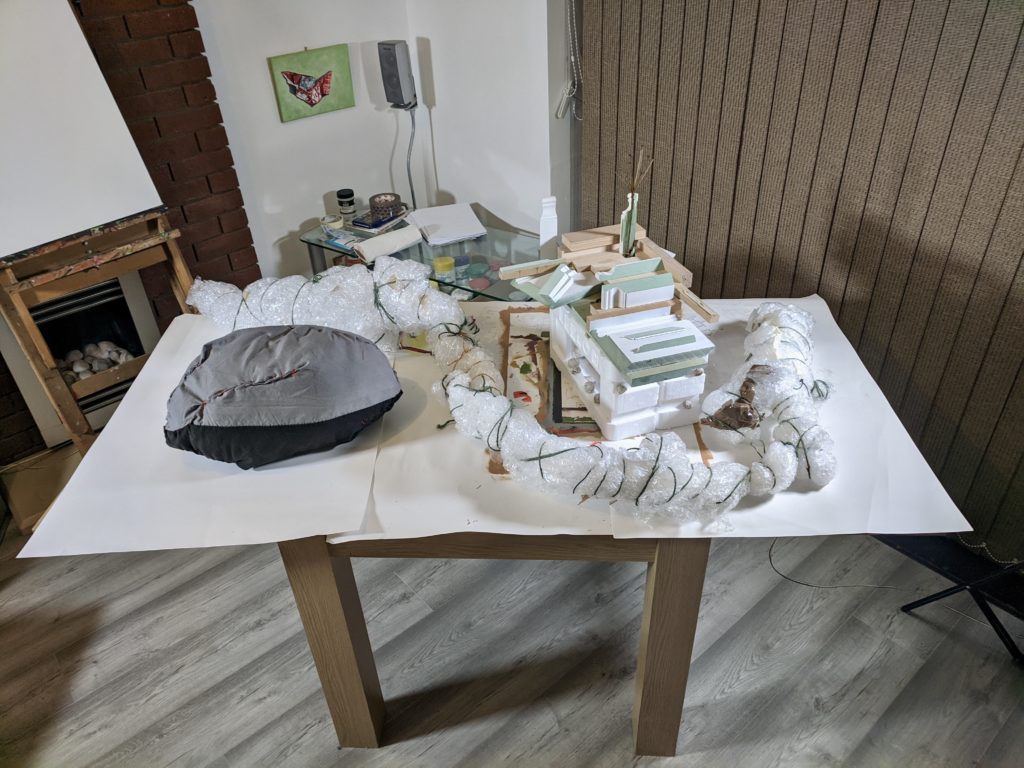
I don’t like this arrangement as it looks like the objects or waiting on the table to be arranged.
Arrangement 2:
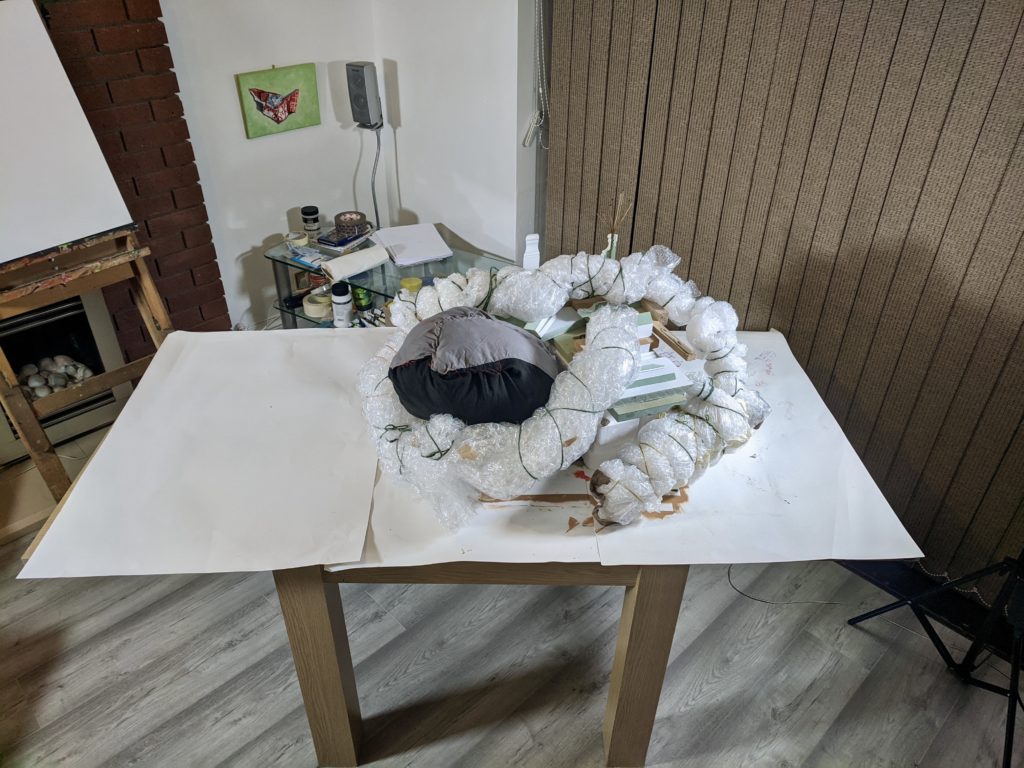
This is better as it looks like some attempt has been made to relate the objects, but it looks more like a random pile than a sculpture… I can’t see any coherent meaning, either conceptually or spatially.
Arrangement 3:
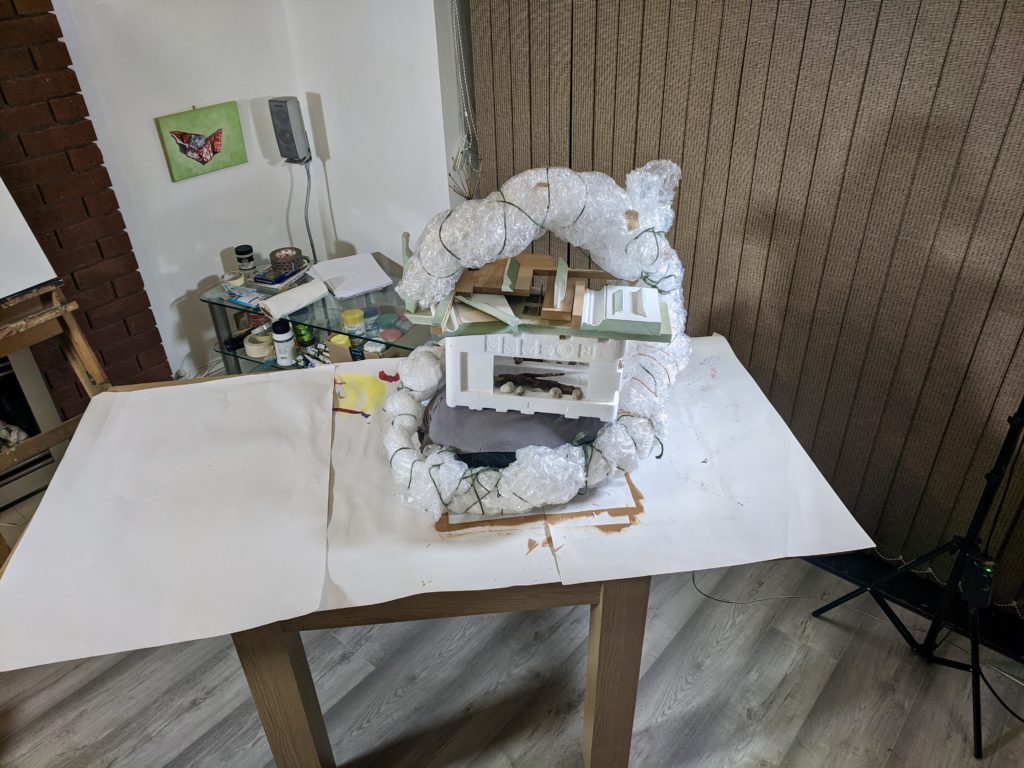
Much better as it’s beginning to feel like some thought has gone into the arrangement. There’s the beginnings of some relatability to the objects and a nascent meaning.
But it’s not good enough.
Arrangement 4:
I took forty minutes out and reviewed my ideas.
I don’t have any sculptural knowledge or language but tried to think of sculptures that I ‘d seen and think how I could create meaning.
My idea was to extend my sculpture to incorporate the table, and by definition (if it were in a gallery) to flow into the gallery space so that it owned, in some way, the whole room.
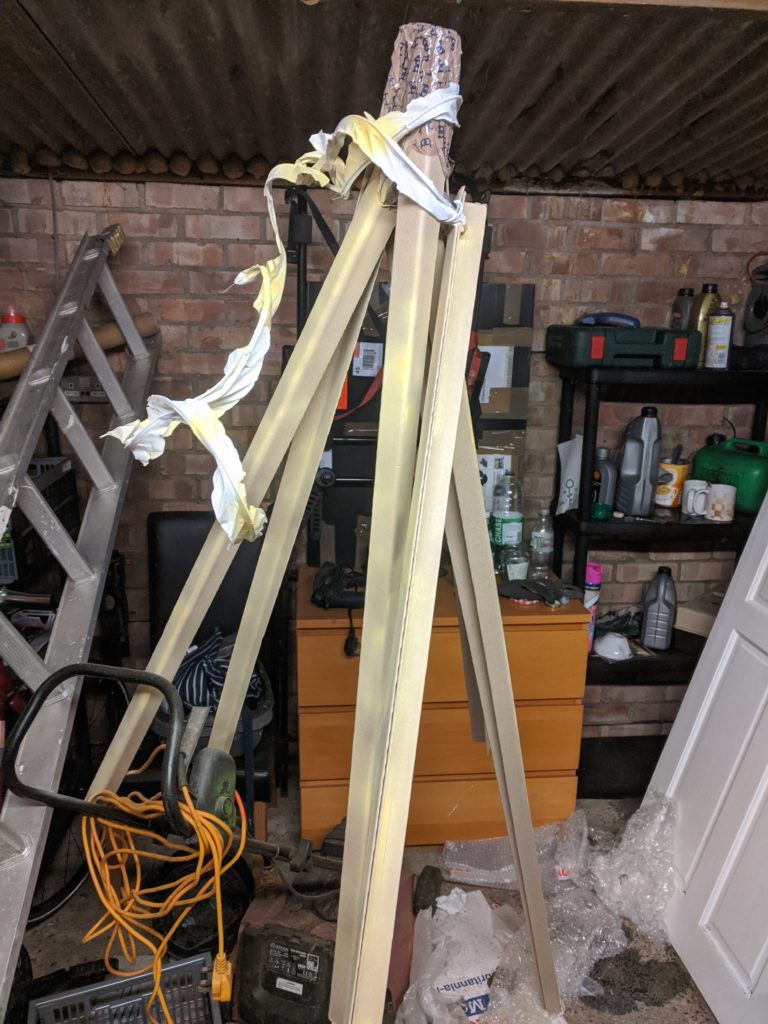
Also, I remembered all the sculptures that I’d seen that had worked involved balance, often a framework and a fluid materiality (almost like paint) that ran from one material into another. So, I launched myself into the dark garage (it was the day of the big storm) found some cardboard corners from my new skirting boards and set to work.
Given my limited tools and skills this was by its very nature a ‘best I can do and might fail have a go why not’ exercise.
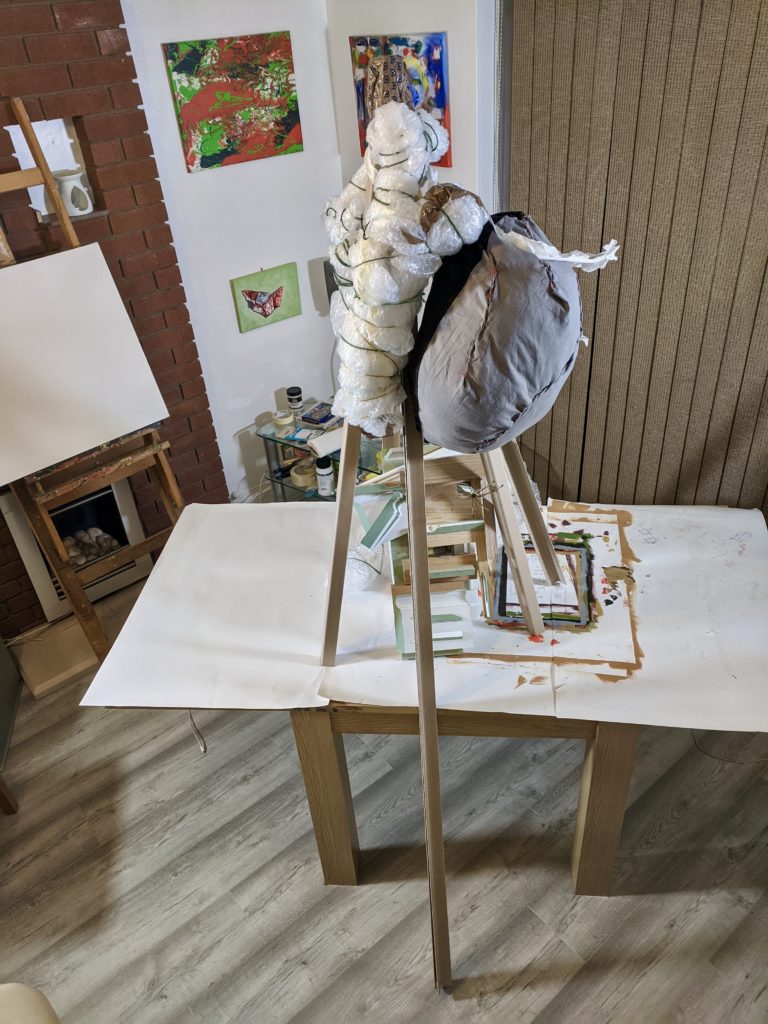
I’m much happier with this as there are some interesting spatial dynamics and some meanings beginning to emerge. But the seed and twig don’t work together on the same plane.
So I tweaked it.
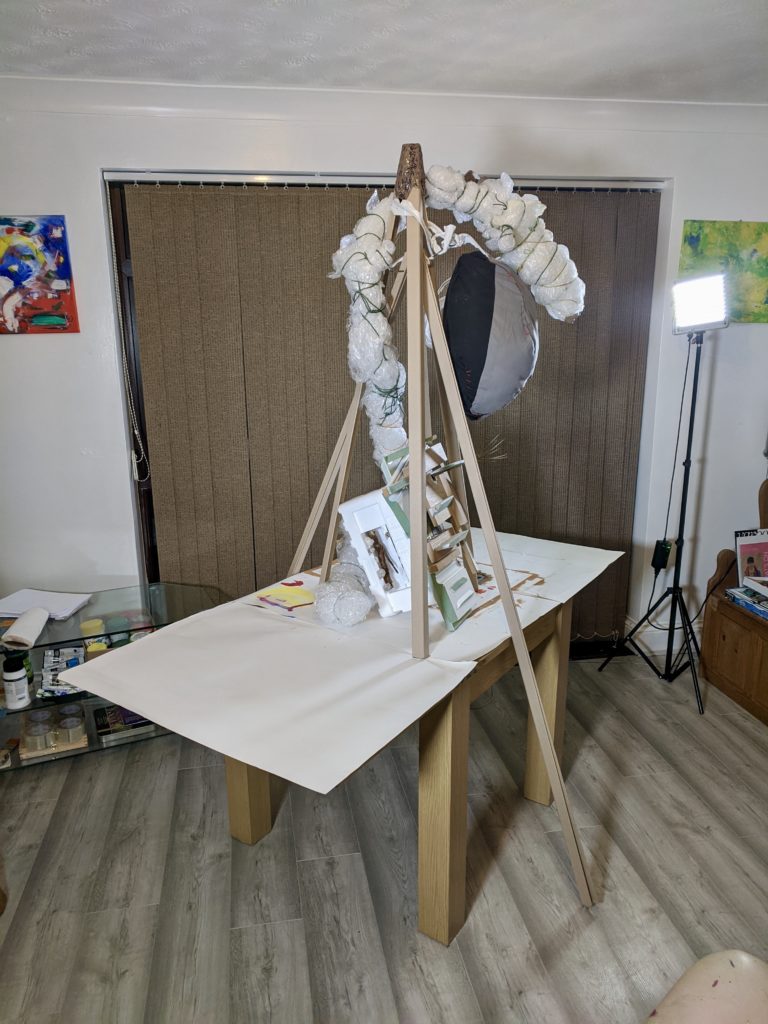
I can accept this, it has a mixture of organic and graphic, a spatial structure, works as a whole, has a presence, some flowing movement, a suggestion of containment, an element of balance in weight and space, incorporates the table as part of the sculpture and flows into the floor and out into the room.
I now have to ‘paint’ it.
I think I’ll need to dismantle it, paint the elements… put it back together and then tweak the colouration.
Painting my sculpture:
I decided to ‘paint’ the four elements (Bean seed, bubble wrap twig, hard sculpture, and frame) separately outside, reassemble them inside and finally paint touch ups to unify the sculpture.
Of course, this is an unknowing piece so everything may change depending on what the sculpture says.
(1) ‘Bean Seed’
This is a stuffed and pillowcase so the outside ‘skin’ is cotton. I didn’t think cotton would take acrylic paint very well and also I’d had a long talk with Luke about integral colours versus ‘coverings’ when we chatted about wood, and I wanted an integral colour for the bean because it’s organic.
So I had the idea of using ink as this would soak up into the material.
First I got rid of the hard line and and added the darker areas by painting on black ink of varying strengths.
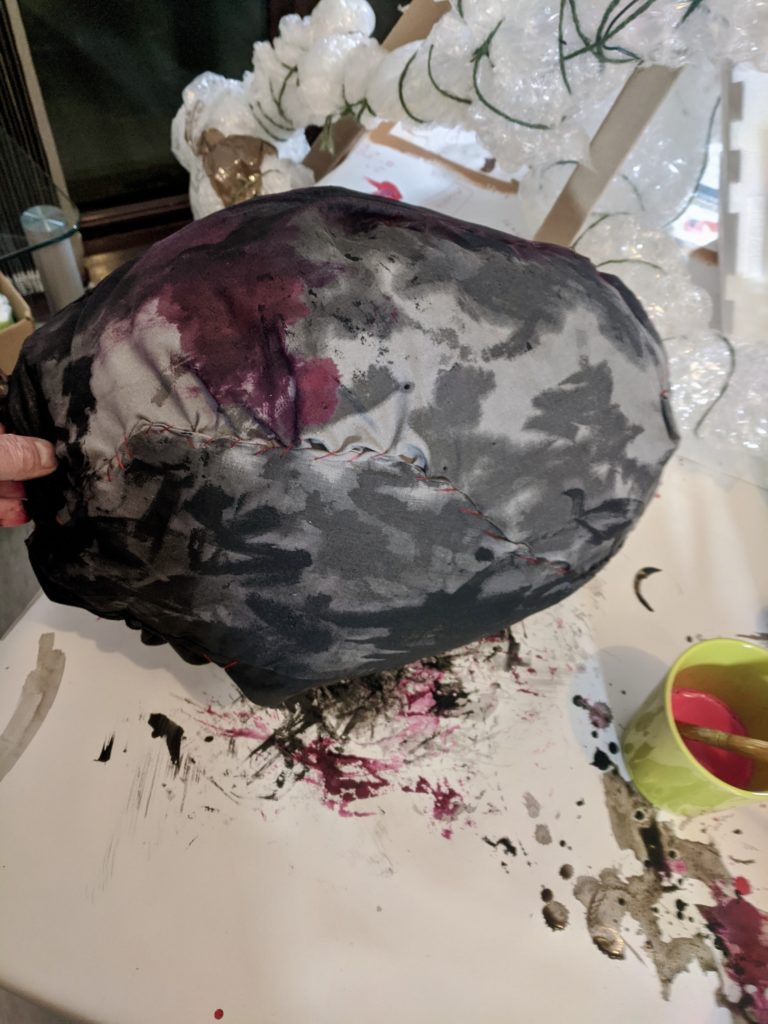
My idea was to paint over this with scarlett ink… where it was black underneath it would make it black-red and where I’d left grey I hoped it would be pinkish.
However it wasn’t looking pink enough so I watered down some acrylic and tried that.
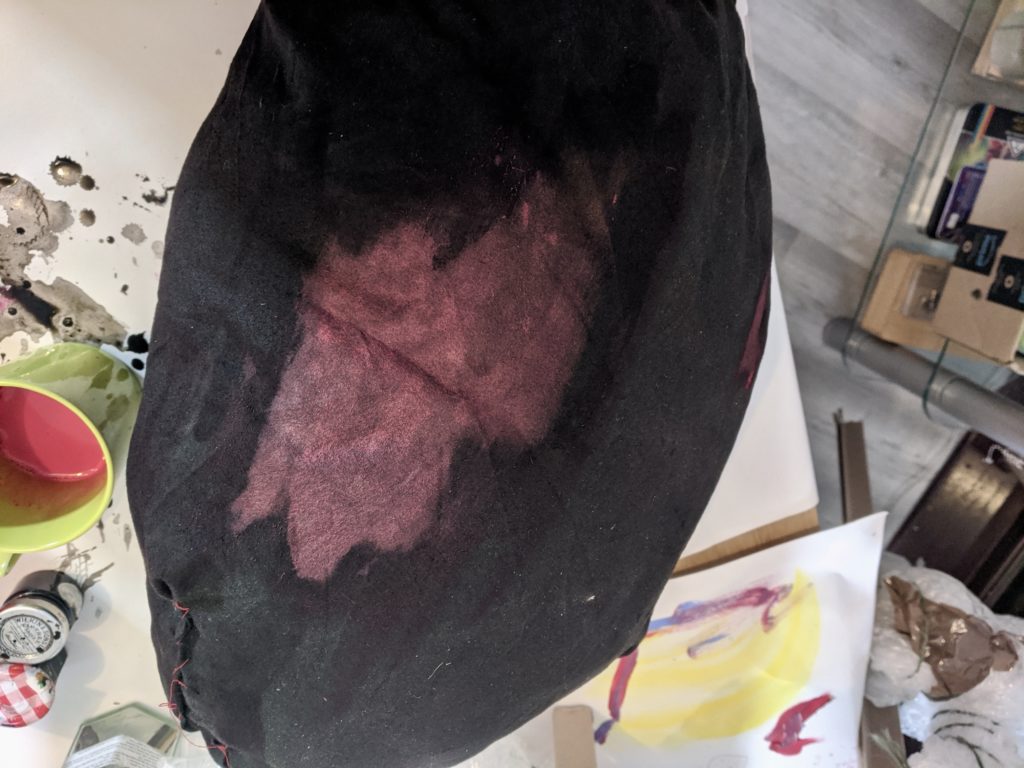
This was much too bright, saturated and garish and even though diluted sat on the surface, so I painted over it with black ink and scrunched it in with my hand till it looked more natural.
I then painted over the black cotton areas with black ink because the dyed black was too regular and flat. The black ink was blotchy and looked much more natural, and also unified all the black areas. I then painted scarlett ink over the whole bean and scrunched it up to break down the surface.
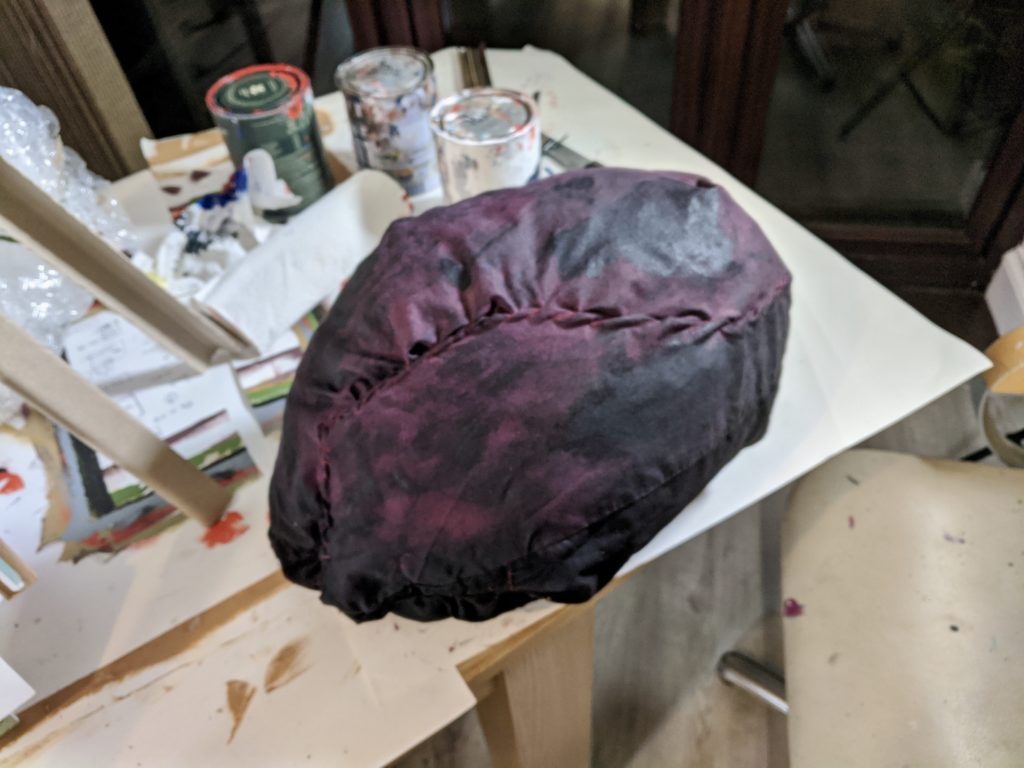
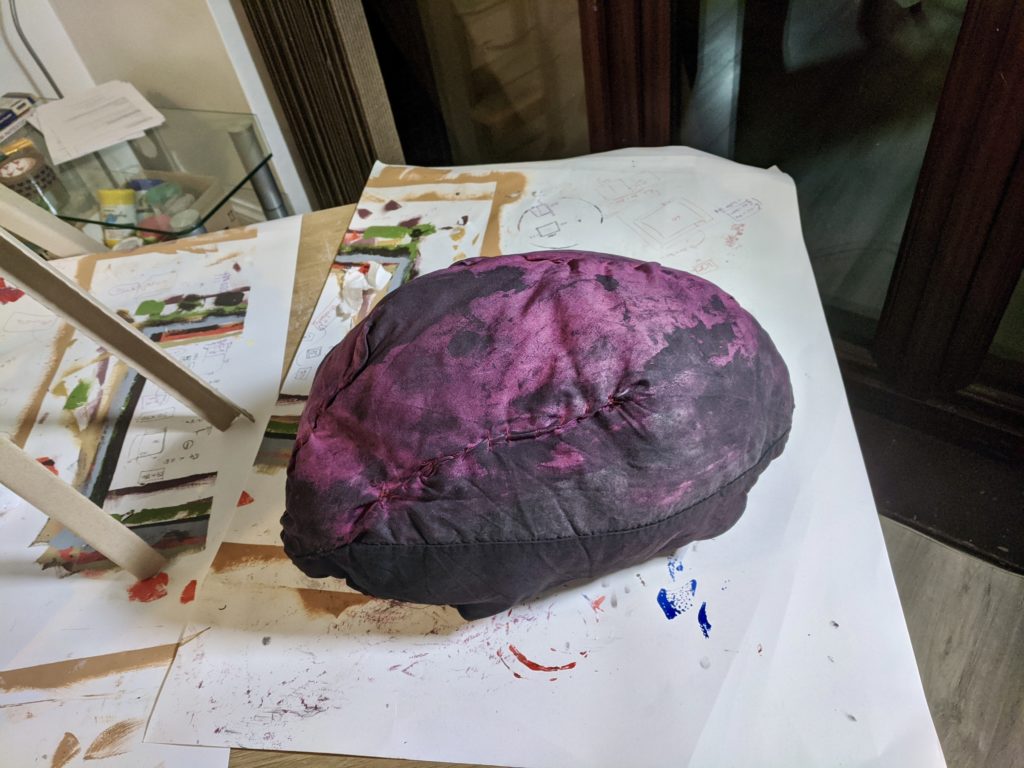
I now put my bean to dry on the radiator and hope it will dry a little lighter so it lifts the scarlet areas.
Bubble wrap twig:
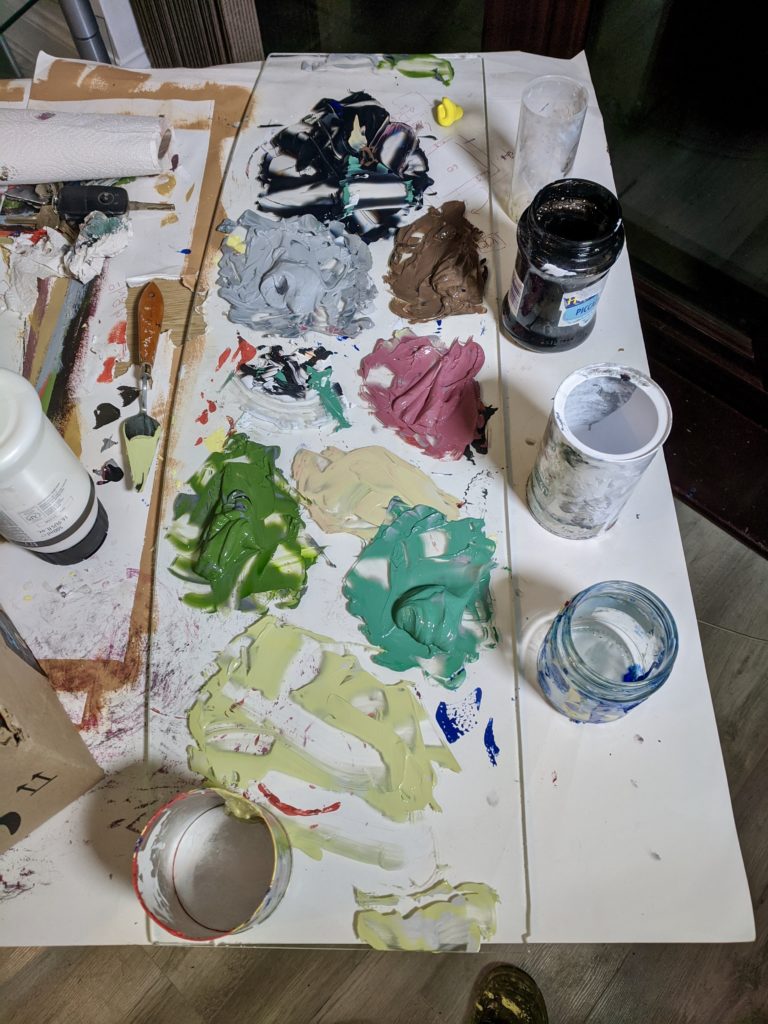
My idea was to mix unsaturated greens, a brown, a grey, a red and a mid saturated lemon yellow. Then dilute them… pour them over the bubble wrap (with the pink on the growing nodes) and throw the twig around the garden to randomly mix the colours.
The colours didn’t run very well as they got caught between the bubbles so I rubbed the bubble wrap with my hands.
Painting the frame:
I decided to paint the frame with yellow spray paint as I thought this might give it an industrial metal feel.
Painting the hard sculpture:
As this is meant to represent the man made world of objects I decided to use primary colours for the ‘surface’ (this also raises the idea of packaging versus content) and blacks for the hidden underworld.
This was the hardest painting I’ve ever done as you are not painting one flat easily accessible surface but multiple surfaces on different planes. It’s like painting multiple paintings that also have to work one painting.
And, it’s technically very difficult because the surfaces haven’t been primed and soak up the paint, or are shiny and the paint doesn’t stick.
This was a huge learning curve and I now understand the difference between painting a sculpture (which I wasn’t doing) and making a 3D painting… I would classify this as a 3D painting rather than a sculpture but in reality it’s some sort of hybrid.
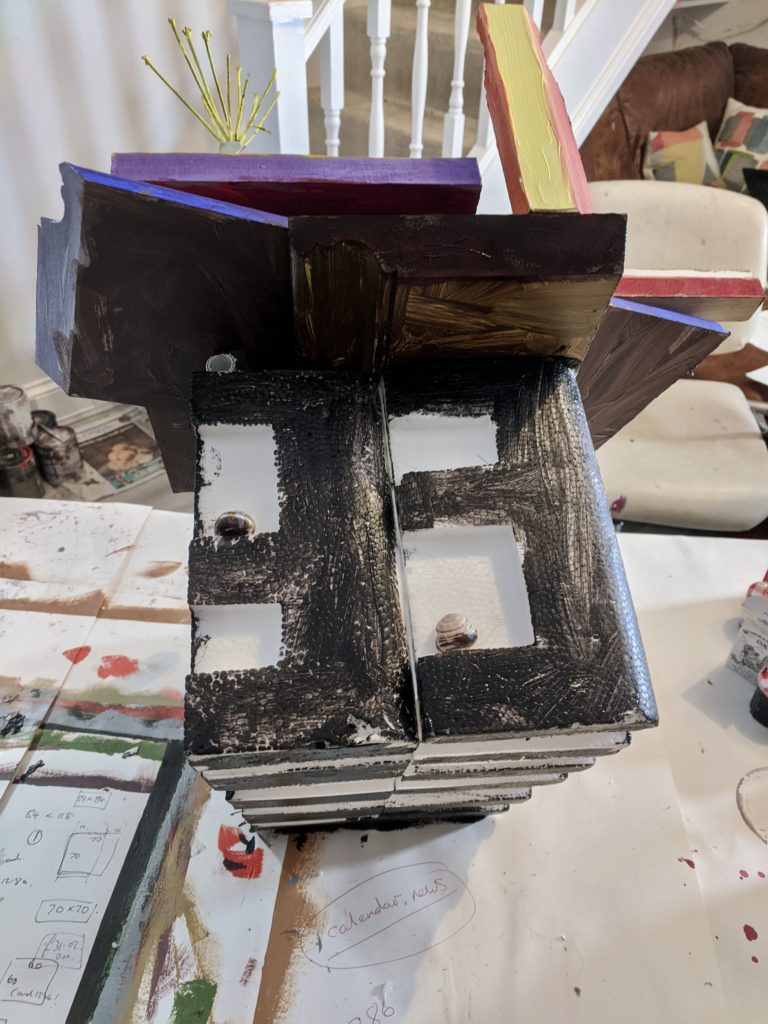
I painted the central block grey because we use lois of concrete.
Assembled sculpture:
Final painting of sculpture to unify it:
Reflection:
Where is the edge of the piece?
The edge of the piece is walls of the room.
Does the piece claim the space?
Yes… the legs run into the floor and the floor becomes part of the sculpture and runs to the walls, so that the whole space becomes part of the sculpture.
How much of the floor is included?
The whole of the floor.
As you move around when are you in the space of the work and when outside?
As soon as you enter the room you are in the space of the work.
How does your use of paint define these boundaries?
It doesn’t – the physical structure defines the boundaries and the paint gives it meaning and personality. It’s a 3D canvas so the paint works in a similar way to a flat painting. But because the canvas incorporates the table and runs into the floor it makes the piece dominate the whole room.
The 3D element gives the colours an almost tangible physical presence (it releases them from ‘the frame’) which is very different from a flat canvas caged on a wall.
How does the physical experience of the work affect your decision making and approach to using paint?
It makes it a physical as well as an intellectual and emotional decision.
It’s like having to speak a totally new language. The work is speaking to me but I can’t understand what it’s saying it in the same way as a flat painting, so my approach feels like guesswork more than informed intuition.
With a flat painting it’s as if the painting becomes part of me but with a sculpture it’s like being faced with a stranger, I don’t know how to best approach using the paint so am guessing and then trying to judge how effective it is.
What is guiding you and helping you to make decisions and take action?
Much of my decision making was conceptual because I didn’t trust my intuition in a new 3D language.
For instance I made the conceptual decision to use unsaturated natural colours for the bubble wrap twig and saturated colours for the hard man made structure.
I tried to make some instinctive colour decisions on the hard structure but working in 3D and having to judge how multiple surfaces on different planes work together (in different lighting and from different angles), and how they work with the overall canvas was too difficult.
 Painting 2: Studio Practice